Switzerland 🇨🇭 : Our Perspective (Long)


Switzerland appears orderly, nourished, efficient, and beautiful—yet beneath that smoothness, Max and LuLu feel a deeper isolation. They examine neutrality as a bodily condition: an organ claiming the problems of the collective are not its own. Full vitality, they argue, demands the opposite movement—crossing the barrier, inheriting responsibility, and making another people’s suffering one’s own.
A Society That Functions Smoothly
Max: So, discussion of the moment is Switzerland. We have to process some data and just our experience there—over there in June, May—for a month or so.
So, we stayed with a family. We bicycled a lot, and it was my first experience of Europe. And when I tell people I’ve gone, one of the questions that’s been asked recently is, “Isn’t it beautiful?”
Which my response to that has been, like, if you’re into society—from a societal perspective—it’s great. It has all the amenities. It’s got all the bike paths and perfect roads and trains and buses. Society functions really smoothly there.
But I didn’t find the vitality that I feel now. I didn’t find, like, the social connection that I feel here in Sri Lanka. I didn’t find the abundant nature and such.
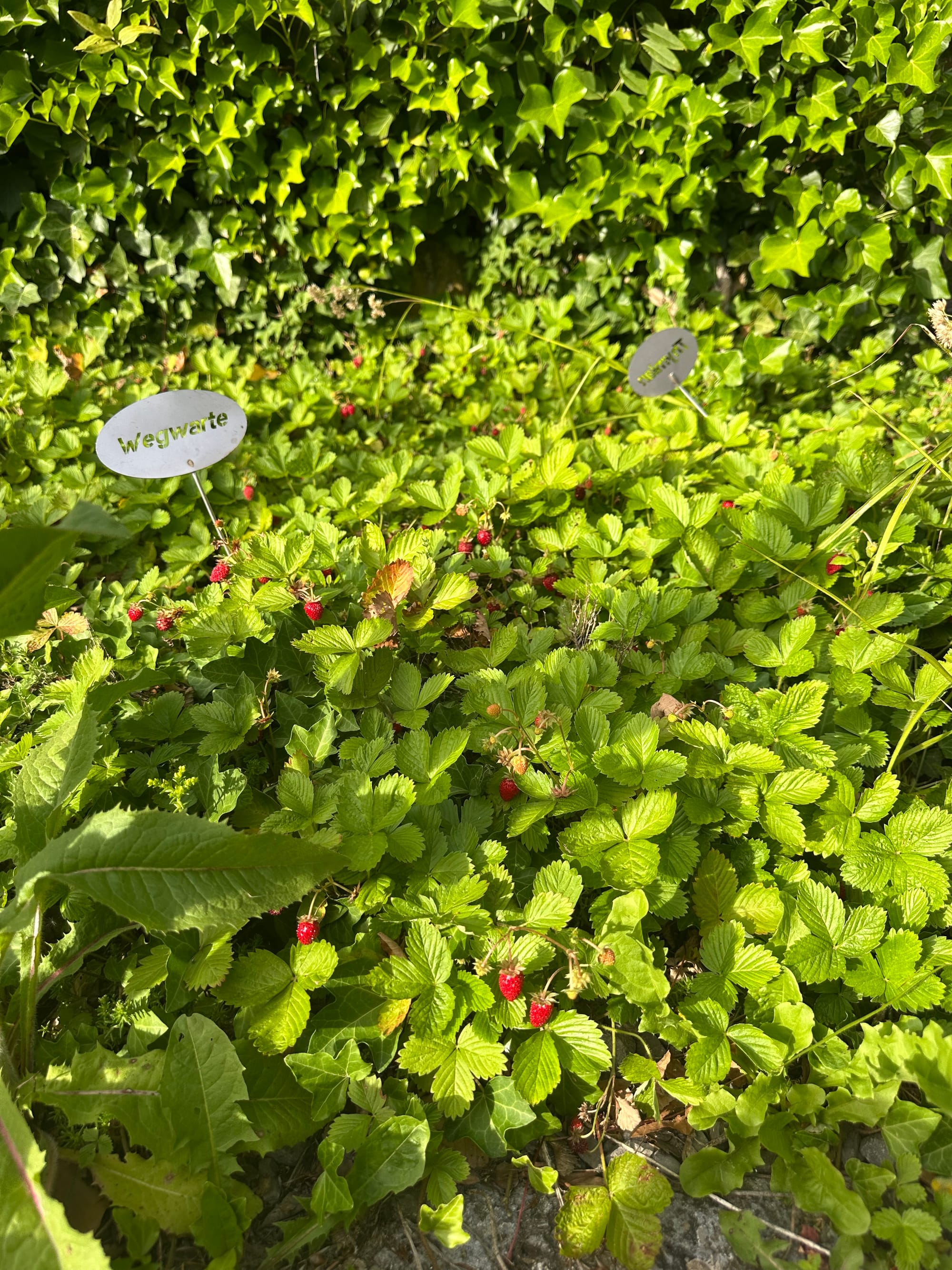
Yeah, we found some wild strawberries we were able to pick, and there were good places to swim. You could get in the lake, and it was diverse, and people were respectful.
Nutrition, Vitality, and Disconnection
Max: I think, from a zoomed-out perspective, the place where we were—down near Thun—has a lot of vitality due to, I think, snowmelt, which gives it a lot of minerals and water that flow in, which you can make a lot of things with. You can make nutrient-dense food with.
It’s been a nutrient-dense place, and we see that, like, the women are quite healthy. The young women have a lot of their nutritional needs met. And, you know, they have all their supermarkets, et cetera.
And I—yeah, I think on one hand it’s super cool. On the other hand, it’s so disconnected from reality. I think it’s shocking.
I guess we can get into that later. More of the positive sides—or, yeah, it was fun. We got to bike a lot. We were with a family that was non-typical Swiss, that had a lot of energy and were out doing stuff.
And, yeah, I guess I have my own personal experience on it, but that’s not necessarily what this recording is about. I mean, from, like, a small-town—like, what was Switzerland? It’s cool. It was weird. Good chocolate.
Returning With a Purpose
Max: I think, like, if I were to go back—which I would—it would just, like… I think I’ve gotten to see it now. I’d want to be of service. I’d want it to be very purposeful, like to do a workshop or something—teaching or offering something.
But I don’t think that it’s a place that I went to and I’m like, “Wow, I need to go back there.” If I was just walking along in the world, I think I would probably be much more called to go back to, like, Pakistan. Pakistan was really fascinating. It was very strange and unique, and there was an aliveness there.
Clearly, I’d like to go back to Sri Lanka. I think if I were to go back to Switzerland, I’d like—for the raw milk.
You know, like, the castles are off-limits. There was one castle that we got to go to that was quite cool to see and walk around in, but it’s, like, an off-limits place. It’s an exclusive place.
A Neutral Organ
Lulu: I think, from a body metaphor—a body perspective—it’s an organ that’s been sectioned off from the rest of the body. It’s isolated itself.
And it’s done that politically in a lot of ways, I guess. It’s kind of made itself this neutral place that has, in its theory, claimed it is not part of the collective, and it will not participate in the problems of the collective.
Inherited Responsibility in the Body
LuLu: And this understanding of—I had this pretty massive download, which I guess I maybe thought about these things, but, again, from an intellectual place, not from a felt-experience place—where I was feeling into the bodies of people there.
And I realized that if they actually wanted to come into full radiance and vibrancy and radical health, they were going to have to solve the—you could say—the problem of Switzerland.
And so I came to this understanding, like, wow: we’re born into the genetic gene pools that we are, and we are carrying the responsibility of the peoples that came before us. They’re in our bodies.
And so, if we come from a people that have isolated themselves from the collective and have said, “Your problems are your problems, and they are not our problems,” the people from those places are going to have to, like, right that wrong for themselves.
You’re gonna have to go into the world and make other people’s problems your problems. You’re gonna have to go to wherever in the world—it doesn’t matter where. Probably the further away, the better, or maybe the more different the people look from Swiss people, the better.
If they can go to places where people are radically different from them in religion and culture and skin color and everything, and say, “You know what? I am going to make your problem my problem. I am not neutral in this conflict. I’m choosing to solve your problem as if it were my own.”
Because it is, from a deeper body perspective. The liver’s problem is the heart’s problem. The heart’s problem is the liver’s problem, and it is the eye’s problem. No single organ can say, like, “Well, that’s your issue. What the fuck are you gonna do about it?”
Living the Solution
LuLu: And so that was, like, the first felt experience that I had in my body—like, oh, wow, we are all carrying these untruths that the country we live in holds: its ideologies; the ancestors that we have; their actions and the philosophies that they carried with them.
And we are going to have to live the solution of those imbalances in order to restore full vitality to our bodies—in order to have access to our full bodies.
And I don’t think I really grasped that fully as a felt concept until I was in Switzerland, when this family asked me, you know, “What do you think we really need to come to health? Like, look—we move, and we eat clean, and blah, blah, blah, and we’re doing all these unusual, outside-of-the-box things.”
And I got this very clear download of, like: you have to go out into the world and make other people’s problems your problems too, and help solve and feel as if they are your own problems.
And that kind of dissolves this false barrier that the Swiss people have constructed for themselves.
Max: Which is pancreas.
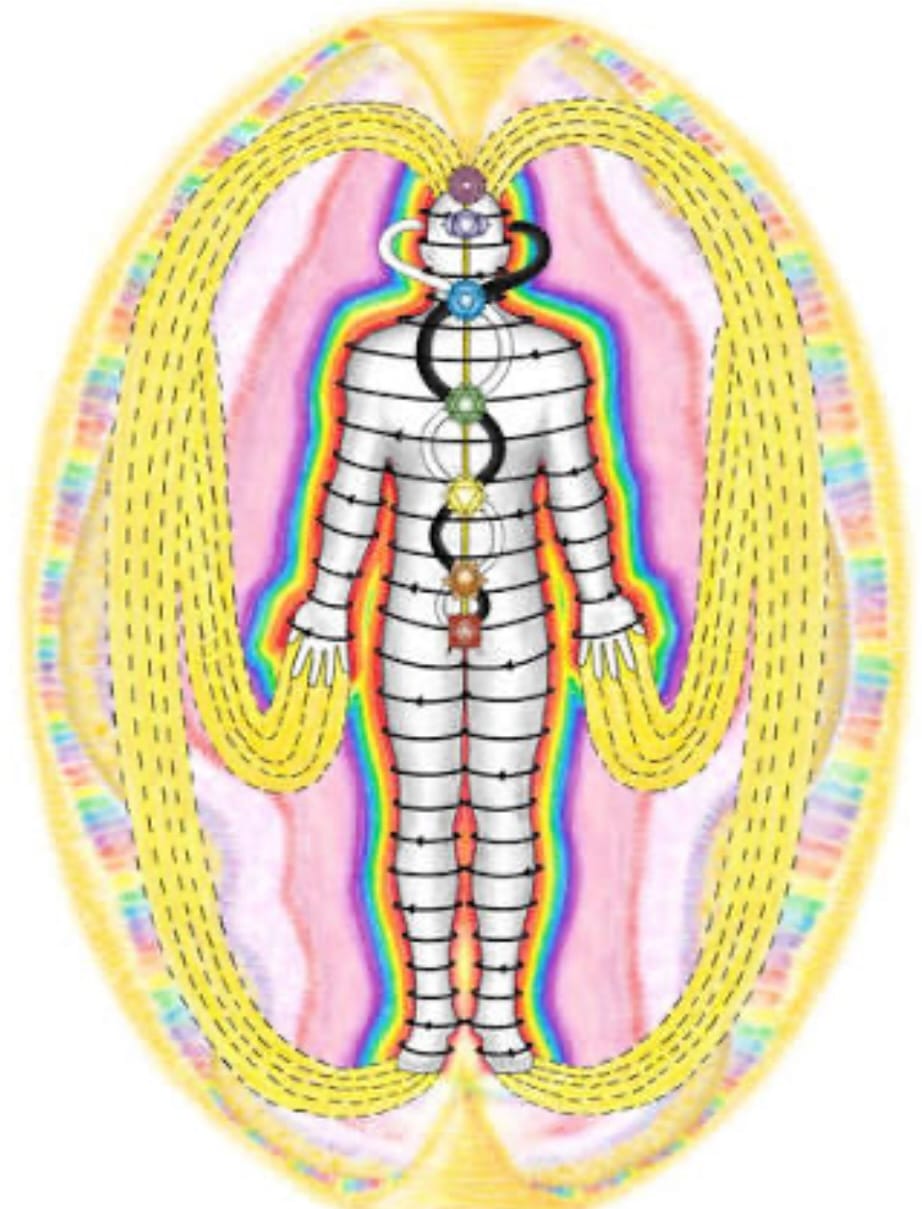
LuLu: Just sacral chakra a lot, for whatever that’s worth.
Max: And its heart.
LuLu: That’s something that we saw when we were there. We were looking around in these parks, and everybody’s heart chakra was totally collapsed.
Max: Yeah. Yeah.
Individual Order, Minimal Responsibility
Max: The communal responsibility is very minimal. It’s interesting. In fact, communal responsibility is not communal; it’s very individual.
It’s: you better do your thing right. You better look neat. You better look orderly. Your house better look proper. And everyone’s just pointing the finger. No one’s going, “Hey, can I help you?”
I didn’t see anyone volunteering at a neighbor’s house to help. The community we were in was a little bit different, but I didn’t see that aspect happening. Do you know what I mean? Like, “Oh, if you need help, we’ll pay a gardener to come help you,” kind of vibe.
The Community on the Hill
LuLu: Yeah. I think the community we were in, on this hill, was very feminine-dominant. It was a hill of mostly women and mostly female children, and then the husbands of the mothers.
They were very communal. They were definitely there to help raise each other’s children and cook for one another, et cetera. When someone needed something, they were there. When someone needed to borrow a vehicle, they were there.
But it’s still within its own organ system, if you will, which, again, doesn’t solve the problem of the karma that Switzerland has created for itself.
It’s still, like, a heart cell helping a heart cell—which is beautiful, and that’s exactly what should happen. But the heart also has to recognize that it’s part of this greater body too in order for it to actually have wellness, where the heart’s just gonna explode. It’s gonna hold all of this blood, and it’s not gonna go anywhere because it’s cut itself off from the rest of the body.
The Missing Feminine Root
Max: Yeah. And, I mean, the family we were with had pretty profound heart chakra. I mean, it was, like, blasting in the family that we were with, and maybe the community that we were with.
LuLu: For sure.
Max: And I think root chakra was kind of what was missing. Feminine root was quite what was missing. It’s this connection of, like, wow: I need to be a part of nature, and I need to answer the call—is what you’re saying, Lydia—that the world’s problems are also my problems.
Like, if I’m okay and everything’s good here, just, “Well, I should enjoy it, because that’s what’s proper.” Go help other people. If your life’s that good, go on—if you have a vacation and you get to go on vacation, go help people on that vacation.
“Well, we have to work so hard in order to maintain our time here.” On one hand, I get that. I do get that. And so there’s a little bit of, like, oh, you do what you can, you do that.
But it’s, like, I don’t have that same connection with this importance of going out and helping people, because maybe—because I live that. That’s very real for me. I do do that actively.
The Best Country
Max: But it was strange to me, on that note, that it’s a very exclusive place. Exclusive.
Everyone wanted to hear that they were living the best life. They wanted to hear, “Oh, you’re in—this is the best country, and this is the best life possible.”
Which people in every country want to hear. I want to point this out. Everybody’s like, “Best country! Yes! Sri Lanka, best country! Italy, best country! Best food here! No, best people! Germany is the best—is the best country!”
So it wasn’t different, I guess, in that sense of finding that people are very nationalistic, and they do support their people—which I find interesting in that regard.
The Healthier Version of Europe
Max: Food was pretty good. Not as expensive as I thought it was going to be. Raw milk is stunning. Great technology there.
The water’s good there. I didn’t have an issue like we did in Italy. There’s free water in Italy—in Rome—and that was a mess. That was really yucky.
And I think, probably in Europe, Switzerland is probably the healthier version of Europe—at least where we were. If I think about what I saw in Germany, what I saw in Italy, they do seem to eat well. They do seem more relaxed. They do seem to be outside—bicycling, by the lake, swimming and hanging out. They do seem to be doing those things.
Ecological Respect and Maternal Reverence
LuLu: It is a place where I feel they have a lot of reverence for nature as, like, an ecosystem. It’s reverence for nature from a very intellectual and educated place. Like, “We should not pollute this area and leave trash in it, because then A, B, and C will happen over time.”
It’s not necessarily as much reverence for nature of, like, “Oh, shit—this is our maternal ancestor.”
And probably it depends. I think we met a few women that really do feel that way, live that, and really tend to nature and revere nature and adore nature and cultivate it, and all of these things.
Lulu: Yeah. We also didn’t go, like, way out into nature. I mean, we didn’t drive deep into the mountains, which is where we are.
Max: True. True.
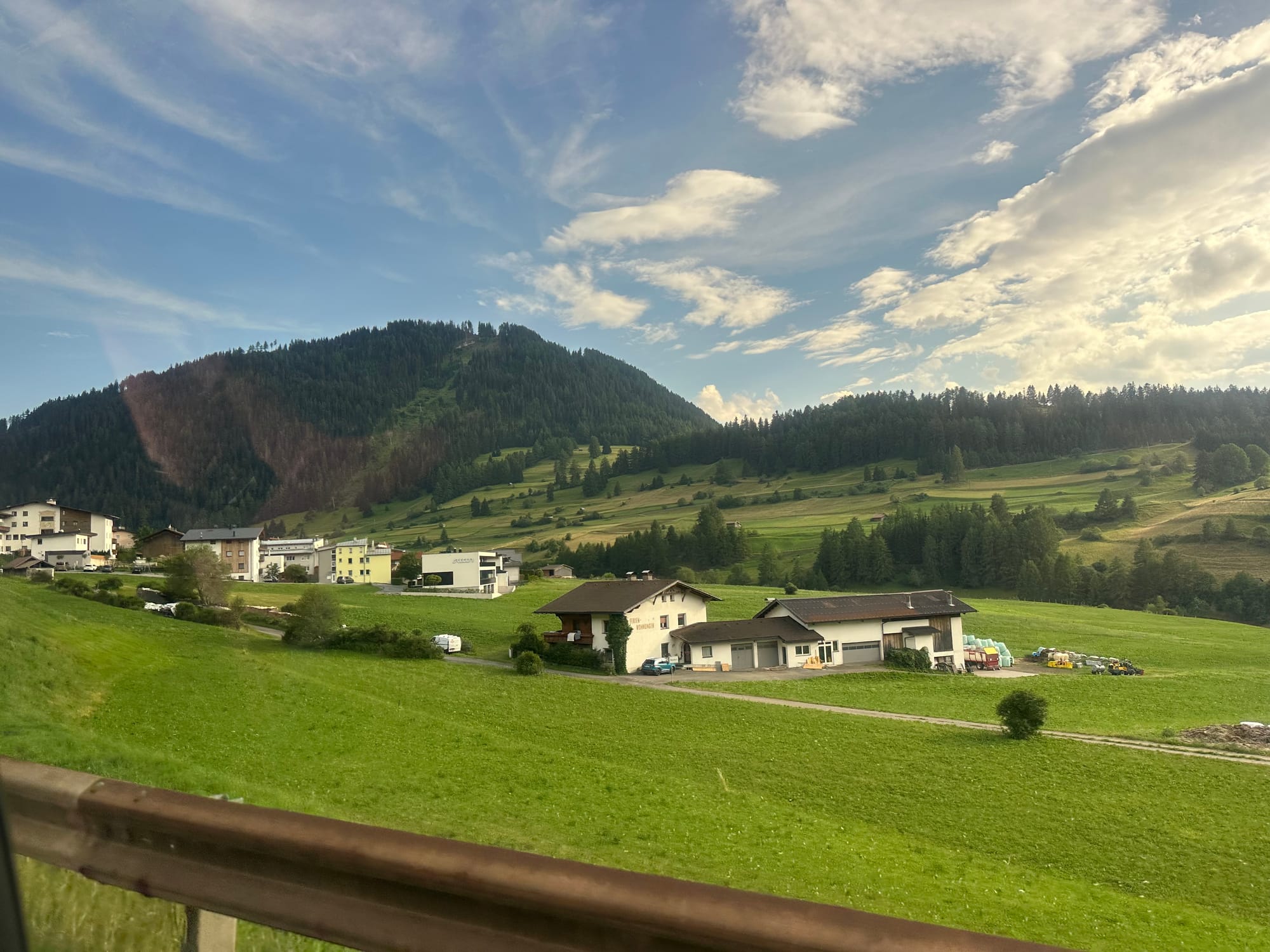
Part 2: The Woman Who Figured It Out
A necessary counterweight to the critique of Switzerland: one nearly seventy-year-old woman demonstrates what becomes possible when land, water, food, cold, community, and service are woven into a single life. From there, Max weighs Switzerland’s ease and cordiality against its social distance—and contrasts its protected new wealth with the ancient, worldly depth still alive in Italy.
The Woman Living Close to Nature
Max: Yeah, we did. We met one woman who was incredibly natural—very into nature. She had a garden, and her whole house was filtered water. She said, “Don’t even drink the tap water. It’s no good,” which we found out also.
Swiss tap water is not as good as it is said to be. And it is stripped of minerals, I think. We had to keep mineralizing our water very heavily.
She had a full filtration system, even for her shower water, I think, in her house. She takes her shoes off and spends time in the grass and in nature every day. She grows her own food. She has a sun porch in winter.
She swims every single day in the lake—even in winter—which is quite stunning. She’s almost seventy. Super cool. Married. Her husband seems to get it too. They seem to get it together. He’s also a gardener.

The Whole Thing Figured Out
Max: And she seems to have figured it out. I’ve been talking to her since, and she seems to have got the whole fucking thing figured out.
She’s living in joy. She’s connected to Earth. She’s doing her community project. She’s offering an opportunity for people to heal through her space. She’s connected super well. That person seemed to be super well.
And I’m guessing in the mountains we would have found a lot more of those kinds of people. If we went deep in the mountains—people that have their own garden and are out in nature all the time, et cetera—we would have found those folk.
Which you can find anywhere, realistically. But I just don’t want it to sound bleak. I don’t want our thing to sound bleak.
Switzerland’s Strengths
Max: In general, I thought Switzerland was quite good. I had a good time. I thought it was fun. We hung out at a castle a lot.
Pros are: it’s quite easeful, easy to move around. People are quite cordial.
Cons would be… yeah, I would think the lack of social involvement. Why that is, I don’t know. But just, like, I don’t feel the friendliness that I like. I just didn’t feel that there.
There’s also friendliness in my hometown. In my hometown, you say, “Hi, how are you?” You talk to people. That didn’t seem to be a Swiss thing that I found.
Returning to Teach
Max: As I say, I’d go back to teach a workshop—as a short snippet for me—as opposed to Italy, where I would go back to Italy.
There’s so much to see there. There are so many old things, and the rise of human development and progress and growth happened in Italy. You can feel it. It’s in the air, and it’s written around you in all these different ways that the land was manicured and such.
And the beings there were quite… I would go back for that.
I’d go back to Rome. I’d want to go back and see some of these older cities and talk to the beings.
A Worldly Place and a New-Money Place
Max: Italy is a worldly place, where Switzerland is kind of new money. Everyone’s like, “Oh, Switzerland, Switzerland.” A hundred years ago, it was broke. Nothing was happening a hundred years ago. Cheese.
So they’re new money. They’re a little bit timid about it. They’re very protective over it.
I don’t think I’ve seen the rising consciousness that comes yet from having money. That’ll take another hundred years or something—if it’s going to happen.
Yeah, I would take their trains. They have really good trains. That was kind of cool. I’d take a train right through there.
Anything else to share with the bear in the moment?
Part 3: The Price of Order
Max and LuLu reflect on the sadness they felt in Switzerland and ask whether the country’s wealth, safety, and meticulous organization have come at the cost of emotional vitality, cultural depth, embodied expression, and connection with the wider world. Moving between social observation, farming, Western ideas of “the good life,” and a chakra-based reading of the body, they consider what happens when masculine order dominates feminine intuition, feeling, curiosity, and surrender—and why genuine interest in other people and places may be a sign of health.
The Sadness in the Air
Max: Okay, we’re live again. So, a question I have about Switzerland is, like, why is there so much sadness that’s just, like, heavy in the air? Like, what is that sadness? Is it the loss of their culture that’s happening so rapidly—their quiet culture that used to be there?
LuLu: I mean, I think at the highest level, it’s sort of what I mentioned earlier. I think it’s the emotional isolation, the energetic isolation. Like, when a country makes a decision like that for its entire nation, it places some kind of energetic barrier around its borders, and people are not literally emotionally linked with the rest of the world in the same way.
Max: I see what you’re saying. It’s interesting and so felt. So, like, one thing—when we are out of Switzerland, people talk about Switzerland has so much money. “Since you have money, don’t worry, they’ll pay for it,” whatever. When we were in Italy and Germany, like, blah, blah. And I started to believe that paradigm.
And maybe what’s happened in Switzerland is that they’ve essentially sold their emotional well-being for money. They’ve traded emotional vibrancy for money—which we’ve talked a lot recently about, how that is vitality in so many ways.
Order, Chaos, and the Feminine
LuLu: And I think they’ve traded it for organization in so many ways. And that’s sort of universally, like, an interesting balance that the universe has to make between order and chaos. If you have too much order, you lose yin. You lose the feminine. It’s a purely masculine place where everything is just countable, and, you know, it’s a very counting place.
Max: Yeah.
LuLu: And when you have too much order what you lose is the feminine, and you lose emotion. You lose emotion when you are consumed by order. And then, same, when you have, like, too much emotion and no order whatsoever, then you just have chaos. So it’s this interesting imbalance.
Max: What did you think of the meat, though?
LuLu: The one from the farm was quite good. I did notice that the farmers who are there are very—they have a lot of integrity in what they’re doing. Again, maybe from this, like, more intellectual and scientific place of, like, “Oh, these are the consequences of not caring for your soil. These are the consequences of doing farming incorrectly,” whatever that means. I’m not very informed about these things. But they had a lot of integrity and a lot of pride about what they were doing. They really cared about their product.
Inheriting a Culture of Craft
Max: Yeah, I think farmers in general do. I think farmers in general do.
I think, again, this is, you know, from the outside looking in. I think this is a strange thing that I see in Swiss culture, is that I think 50 years ago it was a very stand-up culture with quality-made products, and that’s changing. And I think you see this everywhere globally, so it’s not just there. But the new generation doesn’t get it. Like, they’re not really even Swiss. They’re Swiss by name, not by practice, I think.
And they go, “Oh, I’m Swiss, and so the things that I make are good, and things are good,” not because they really pay extreme attention to detail and really make a well-crafted item. They’re just part of a mechanism that was built before.
And I think probably there’s going to become an upheaval right now, coming in the next probably 20 to 50 years, where we see this—like in Sweden, for example, which is much older money—that very masculine style of accountability and organization, when you include the feminine, when you try to put the feminine aspect of diversity and inclusiveness into it, it struggles a lot. It struggles a lot to keep up. And I think we’re seeing that now in Switzerland.
“We Have It So Good Here”
LuLu: I felt something there that I actually feel in the U.S. a lot. There’s this strange—there’s this idea of, like, “Everything is so good here.” And, again, it’s this, like, maybe very Western idea of what people think is good.
I think, in many ways, people who have been raised in the West have been educated to believe that people in places with few dollars—or people who have very few dollars—their life is not good because of that. And, in some cases, that’s true. Sometimes. It depends on the situation. And in many cases, it’s not true. In many cases, these places that have very few dollars live a life of incredible fulfillment and vitality and excitement, and, like, a deep—a life of deep interaction with life itself, which many people in the West will live and die and never know.
But there’s, like, this strange guilt of, like, “We have it so good here,” and then also the pride of, “We have it so good here.” And I noticed that, as we were working with some people that we were working with, there was this attitude of, like, “Can’t you just see how good our lives are?” Which I’ve heard in the U.S. a lot too, of, like, “We have it so good here. Look at the freedoms that we have here. Look at the infrastructures that we have here. Look at the education we have here. Like, it’s so good. You can’t say anything bad about it because this is clearly the best place in the world.”
Max: And it’s true, again, from, like, one chakra. Maybe it’s probably true from, like, third eye, you know, from sixth or something—from sixth chakra or masculine root, or—
LuLu: Yeah, a combination of those two. Masculine is, like, safety and order and consistency, because Germany’s probably got sixth chakra on lockdown—at least masculine sixth.
Lulu: Yeah, like intellectualism. You know, that’s what we mean when we’re talking about, at least, like, masculine third eye, masculine sixth. It’s like intellectualism.
Max: Right. Switzerland isn’t a dreamy place, let’s put it that way. It’s not a place of fantasy and such, you know. But, yeah, there’s this feeling of—and, again, I see this in the States too—where people are afraid to name the parts of life that they feel deeply dissatisfied with, because it’s like, “Oh, we’re not allowed to do that because it’s so much better here than other places,” which is government propaganda.
A Body Perspective
Max: It’s government propaganda. You know, it’s this othering.
And from what you were just talking about, it did bring up this interesting thing. Like, if I just give, like, a body perspective on the people—which I should probably make its own recording, but I’m not—in general, what I saw was collapsed heart chakras pretty well universally. I mean, the chest was just, like, collapsed forward. Forward-head posture everywhere.
We saw solar plexus was pretty much off. Throat chakra was essentially off. Like, no one was speaking their truth. There were no loud noises, no loud voices, which is a throat. The child next door, for example, is hollering all day, every day, just making sounds. And it doesn’t irritate me because they’re real. He’s not just making noise; like, he’s expressing himself.
LuLu: The child next door here in Sri Lanka, not in Switzerland, right?
Max: I mean, there was no child. Yeah. Lydia was the loudest one in Switzerland.
Lulu: And so, throat chakras—you know, we see that. And that just, I think, again, comes from, like, a civilization with a massive amount of order. When there’s so much order, throat chakra kind of comes when you’re speaking for something or in opposition of something. It’s like the throat chakra turns on when you are speaking on behalf of a cause, you know, when you have authority over something or someone—a community.
And so, when everything has been very homogenized and the entire nation kind of works on this very consistent clock, there’s nothing to speak out about, really. And so, over time, like over a few generations, throat starts to turn off.
I think the isolation thing is what causes the collapse of the heart chakra. Solar plexus, again, probably it’s like: Why would you need such a massive amount of, like, individuality and will when everything is just running smoothly? So we see that.
Max: I didn’t see seventh. I didn’t see almost anyone with a mission, aside from our gardener. I just didn’t see anybody with any cause, which is what Lydia brought up in the beginning, in the first audio, if you listen to that.
Wealth, Purpose, and Responsibility
Max: This idea that there’s, like, Switzerland—if you’re living in the best country, safest country in the world, in a situation where that money was given to you to protect—like, your purpose has been protection of the international money and funding, and you’re getting paid for that—I think there should be a natural response of wanting to, like, make sure that everyone’s benefiting from that, you know, not just the people that are winning.
And I don’t think that’s hit Switzerland at all: this idea that, hey, we’re rich not because we’re, like, good people or there’s something special about us. It’s just, like, geographical advantage—a geography thing. And so, if you are at a geographical advantage, then making sure that you’re tending to places that aren’t—like, you know, I think that that’s an important thing that should be noted. Like, I think that would birth the seventh.
Reading the Chakras of a Culture
Max: So I think, in general, I see good masculine root. They do have some sort of feminine root. You could say some minimal amount, because they are protecting nature. They seem to have very little sacral, enough solar plexus to keep things moving, essentially no heart, essentially no throat, and sixth going. You could say probably quite good masculine sixth, not feminine sixth.
Essentially, their feminine side is just gone, because they don’t have dreaminess of feminine sixth. They’re not listeners—like, you can’t tell them anything. So they’re not navigating from intuition. They don’t have feminine throat. They’re not listening to the teachings of the world, which would be feminine heart. They’re not giving themselves to, like, emotion and chaos. They’re making sure that everything is, like, tidy.
And—which is why, I think, the young women flourish young until they’re part of society and they’re in the actual mechanism of it. And then they just fall apart. Their bodies fall apart. And it seems like, at, like, 35, you’re still stunning, and after, like, 35-ish, it just starts to go down pretty quick. And by, like, 50, it’s just like—
LuLu: That’s pretty common throughout the West, though, entirely. I mean, it’s much—it’s much earlier, even. You see women start to really suffer from the hypermasculine system from the time they’re 20, because, in many cases, that’s when they enter the work field. And so they’re forcing their body into a masculine hormone cycle, and it wreaks havoc on their system.
Max: Yeah. Yeah, there’s some of those zoom-out things, I guess, that might be interesting. But there’s only so much you can cover. We’ve already done maybe 30 or 40 minutes on this.
Curiosity as a Sign of Health
LuLu: I think the healthiest people that we saw were people that were genuinely curious about, again, the outside world. They were genuinely curious of, like, you know: How are people in that place? Do they have community? Are they happy? What makes them happy? Do they have health?
You know, again, something like this came from the gardener woman that we met. She really wanted to know about what made people tick in the other organs of the body of Earth, you know, in these other places.
Max: Yeah, I think she was entirely different from everybody there, essentially, I would say. Everyone I met—she was a standout human. I talk to her still regularly because it’s just great conversation. She has great points. She has good questions.
LuLu: Like, the whole time, you know, we were there, I don’t think people really asked us—like, we were asking people questions. We were asking people about Switzerland, about why people are the way they are—not from a negative place, just, like, good and bad, you know: Why is this like this? Asking people about their personal lives.
And I think, in general, we got very few questions about us. You know, maybe particularly me, somebody who comes from a very different culture and society—
Max: Looks different, smells different, sounds different.
LuLu: Yeah. And there was no, like, “What is it—what is it like there? You know, what is the energy there? What do people eat there? What are their dreams there?” There’s just, like, zero curiosity because, again, this idea—which is also in the U.S.—of, like, “Well, this is the pinnacle. There’s really nothing else to learn from anyone or anything else. Like, this is the apex.”