Rome. Wealth as a Technology of Isolation

The Castle, the Grid, and the Stories Nobody Tells
Max and LuLu examine wealth as a technology of isolation: clearing ancient land removes the mirrors that humble us, while separation from diversity weakens our ability to metabolize life. Their journalism becomes a response to a deeper calling—to recover the forgotten stories of simple, whole lives and help people reconnect with the living grid.
Chapter One: Two Methods of Journalism
Max: And we are live, this time sponsored by chocolate chip cookies. Gluten-free.
Part of journalism, I feel like, is that you’ve got to output. You know, there’s a method of journalism where you put only selected documents out, and there’s a method of journalism where you just fucking put everything out.
I’ve chosen in the past to just put everything out. Maybe as we age, that’ll change, but that’s the method that we’re taking.
Chapter Two: Wealth as Exclusivity
Max: So, as we’re traveling about and going through, I notice this notion of wealth. Wealth is about exclusivity. It’s quite strange.
If you’re super wealthy, you get a piece of land to yourself. If you’re super-extra wealthy, you put a fence or a wall around it. If you’re super-extra-wealthy wealthy, you buy your neighbor’s house.
It’s this exclusivity. And when you do that, you clear the trees. You put in new trees that look pretty. You cut out all the old roots and the old things that used to be there. It’s like, now it’s yours.
It disconnects you from the old thing before. So it gives this mirror back that you’re the only thing that exists—this sense of self-importance.
Nature can’t mirror back to you and say, “Hey, pipsqueak. You’re 30 years old. We’ve been around for millennia.”
Instead, you go, “Wow, look what I have made.” The trees come back and go, “Whoa, I’m brand new here. This is weird, crazy,” or whatever.
It’s isolation, really. And I think this is why a lot of wealthy people end up really sad. Whereas wealthy people that move into old houses, old neighborhoods, and communities probably enjoy themselves a lot more.
I just find this interesting as we drive through the land of castles. All these people who made money and said, “I’m going to separate myself from everyone else.”
Which, back then, maybe made sense due to safety reasons—but I think the story has been convoluted. I don’t think that’s actually true. I think we’ve been sold that story because that’s the popular narrative.
I bet you there were tons of people having so good of a time—just enjoying life, living simple. They didn’t need a castle. They were born and died, and in the middle, they had a great time.
I think those stories are the ones we’re trying to tell: the stories of people just having a good time. The news that never gets told. The simplicity at which they lived and the wholeness at which they lived.
Do you have anything to say about this, LuLu Bear? Maybe in a way?
Chapter Three: What Isolation Deactivates
LuLu: I don’t know why—it doesn’t feel particularly related—but the thing that keeps coming up was actually remembering the stories that I heard, downloaded, or interfaced with the first time I went to the Roman Forum.
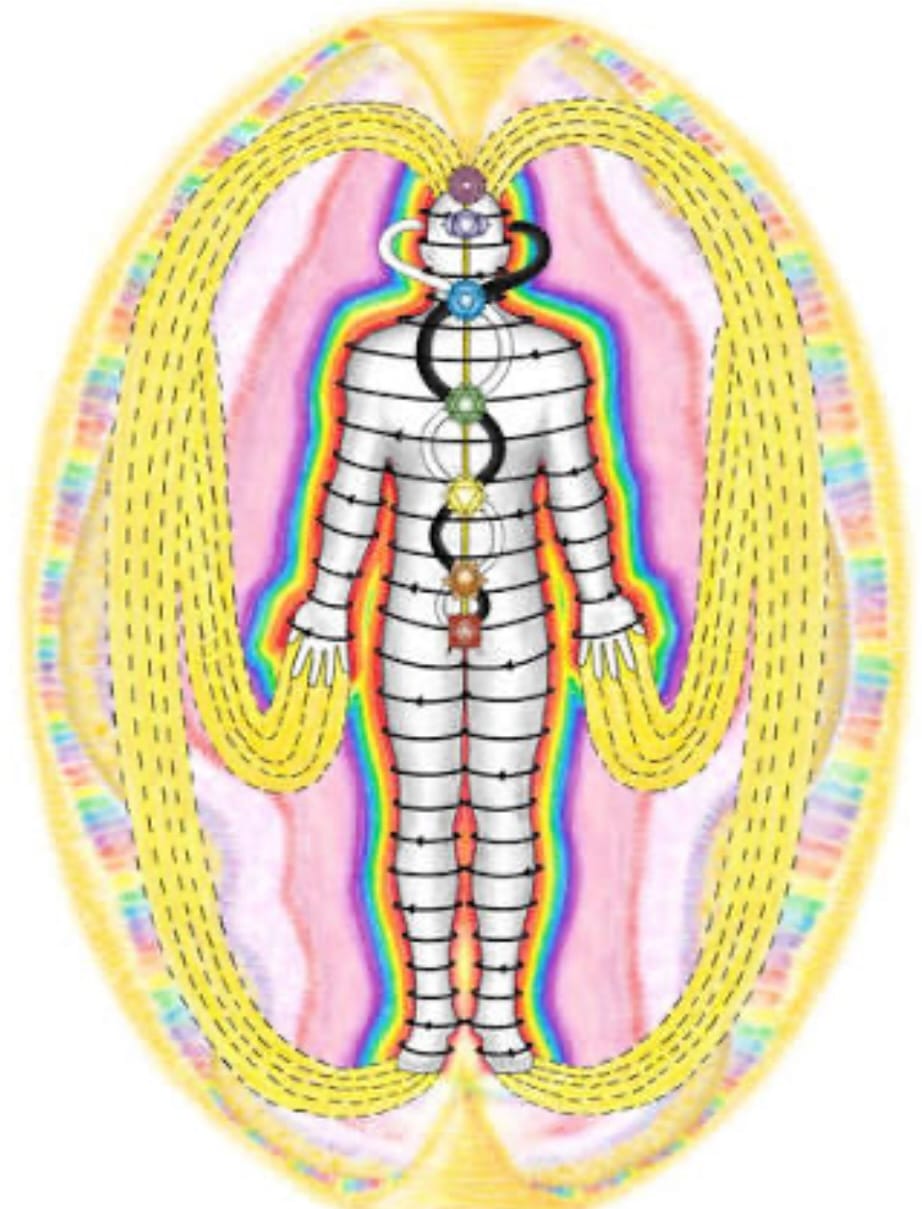
It was telling me about how people who once did have their entire glandular system activated got certain glands deactivated through various torture techniques by other people.
It was telling me that being laughed at and humiliation turns off—it deactivates—somebody’s solar plexus, their gallbladder, their adrenal system. You know, being sexually assaulted turns off the gonad system, the root system.
I think it’s like isolation. I guess this is coming because you were talking about isolation.
I think it’s saying that isolation—separating yourself from diversity—turns off the sacral and pancreas system. It no longer allows you to alchemize life around you in the same way that digestion does.
People who eat a really sterile diet are quite bad at digestion, ironically. They’re quite bad at alchemizing life around them.
It almost makes them rigid. It makes them unable to flow with life. It makes them unable to see every type of circumstance as an ingredient that can be used toward something magnificent and genius.
That’s what isolation does. It debilitates the sacral and the pancreas.
These stories are ones that we wish to tell for a variety of reasons:
One, because they need to be told.
Two, because it’s exciting.
Three, because we have a shared experience of that in our own lives.
Chapter Four: Answering the Call
Max: I think there’s a calling from life itself to have someone do this, and we’re just answering that call.
Jesus called, and we picked up the phone. He said, “Hey, can you share a message? People are starving—and they’re sad, real sad.”
We said, “All right, Jesus. We’ll go in there and chat with them all and see what’s going on.”
This has been written in my code since 2014, at least.
And now, we’re going to this next couple. We’ve got a group coming up here in a minute—Italy, just north of Pisa—to meet with a half-Moroccan, half-German, whatever that even means, and a half-Israeli, half-Brazilian, whatever that means.
A very strong mix. Four continents. DNA.
The idea is helping them recover themselves—helping them integrate themselves back into the grid, because they feel lost.
This German-Moroccan is spending all of his time away from his homelands, and he feels confused. She is spending her time away from her homeland and feels confused.
So we’re going to work with them. They’re two next pieces.
We’ll make a little audio update about what that’s going to look like and how that’s going to be.
Over and out. Thank you for coming.
</div>