Philosophy on Relationships


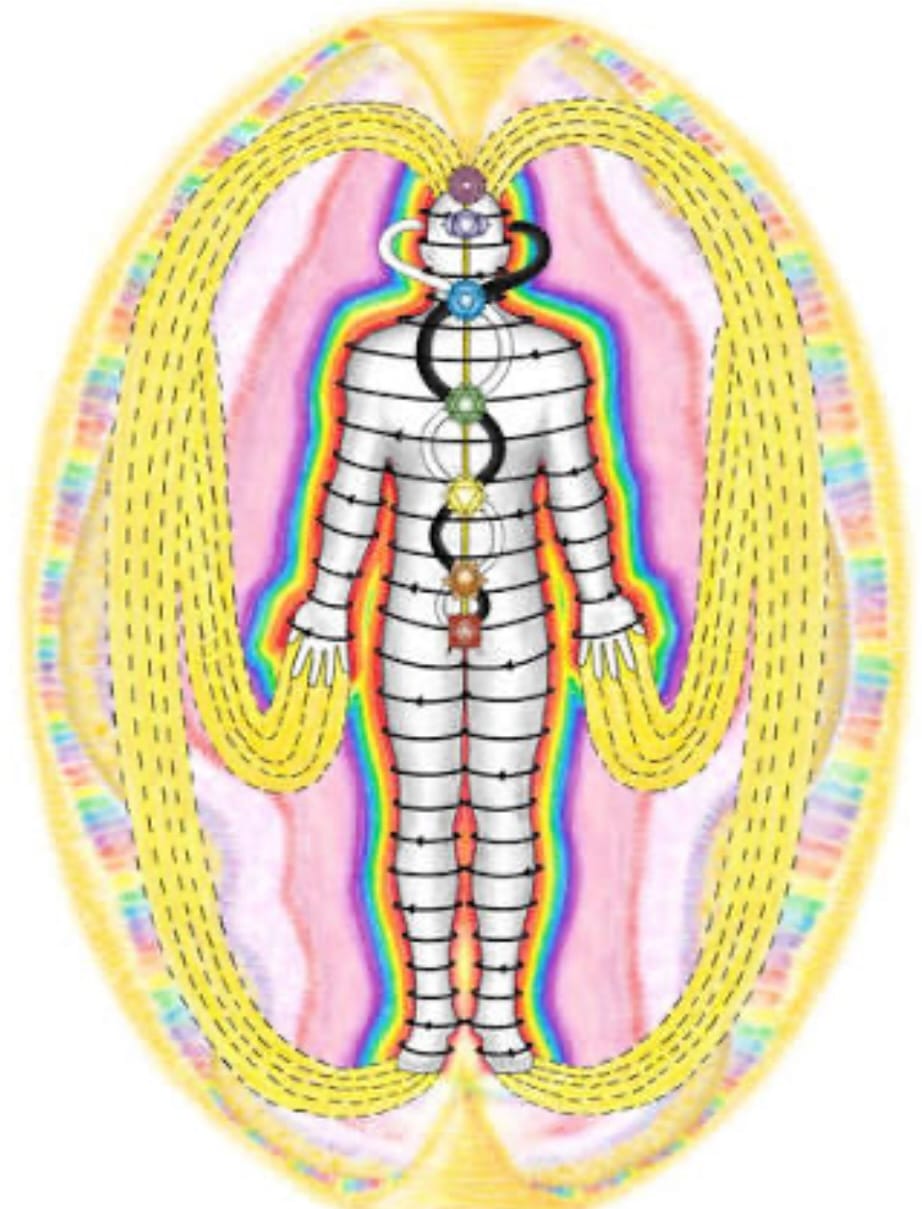
Max and LuLu examine relationship as a living technology: two bodies, experiencing different realities, attempting to become coherent without destroying one another. Conflict becomes useful when it reveals the split between one’s own mind and body. Beneath the complexity lies a blunt foundation—an exhausted, underfed, chaotic body cannot sustain intimacy.
Two Bodies Attempting to Converge
Max: The technology of relationship.
LuLu: Max just said, “The technology of relationship.”
Max: Asian woman. Fight man. Together. Fighting.
Trying not to kill one another every day.
Every day we make it—one of us not having killed the other—is a miracle.
LuLu: I’m not sure anymore.
Max: Speak for yourself.
It was true for the vast majority of our time. Not literally—but for moments, maybe actually.
The technology of relationship, you know: this back-and-forth dynamism between two bodies.
We’re experiencing a different part of reality and attempting to converge and work together.
Logically, it sounds simple from my current direction, but for most people it’s an absolute mystery.
If you don’t know what your body is or how it works, then the idea of working with another body is just random.
“I hope it works out.”
For Lydia and I, it’s been an intense journey.
We hated each other from the moment we met.
That level of intensity between us—that charge—we’ve essentially turned into quite a reading. We have thousands of journal entries.
LuLu: Potentially tens of thousands.
Max: Potentially, yeah. Tens of thousands.
Relationship as an Internal Mirror
LuLu: You know, attempting to figure it out and describe it and make it so we can indeed work together.
The main thing that has kept me in this very chaotic and terrible container that we call relationship—
And it was an interesting moment when I came to this realization, and I felt quite stupid for my suffering once I came to this realization—
But everything that we’re talking about concerning the body, for example, is this relationship between the two principles of body and mind.
How do I unite awareness with myself?
And that’s the exact same thing that’s happening in relationship.
How do I unite and cause these things—these things that are seemingly two things, that seemingly behave as two things operating and oriented in different directions—
Max: Yeah, in different directions.
LuLu: How do I experience them becoming this cohesive, unified thing?
Because through the unification of these two principles comes the thing that births creation.
It’s the unification of the masculine and feminine principle.
This is how any type of creation comes to be. It’s through the play between the masculine and the feminine principle, the darkness and the light, the peepee and the vagina.
Max: The push and the pull.
LuLu: Exactly.
Conflict as Initiation
LuLu: And so once I understood that this was the initiation happening between Max and I—and that this was why the intensity was there, because it was describing the degree of incoherence between my mind and body—then I was on board.
Then I could understand that every time there was some kind of conflict between Max and I, I could go and sit down and ask:
“What is this telling me, in this moment, about the relationship between my own masculine and feminine principle—my own mind and body?”
And the answer usually comes quite quickly.
And so it’s an opportunity.
The conflict that arises in relationship becomes this incredible initiation and profound opportunity to almost be, like, a step toward enlightenment, if you want to call it that.
I don’t really like that word.
I prefer, like, mind-and-body unison or something.
Max: Yeah, I don’t even know what enlightenment is anymore.
I think it’s much more simple: unison or aliveness.
They’re the pedals on a bicycle.
And if you’re good at one and not at the other, you’re not going to go very fast. And it’s not going to be very comfortable.
You really want them to:
Left. Right. Left. Right. Left. Right.
The Push and the Pull
Max: If you look at the push and the pull—so if the masculine pushes and the feminine pulls—if the masculine pushes too much, guess what’s going to happen?
The feminine is going to pull extra to pull it into balance.
Men often go, “Wow, she’s so clingy,” or, “So needy,” or, “So this.”
The woman—or whatever, many types of relationships, use a default one, a traditional one—the woman is going to try to pull that thing to a halt.
She’s going to try to pull this masculine expansion into meaninglessness. She’s going to try to pull it to a halt.
Men always say, “You’re trying to get successful, and a woman is going to come and pull you back.”
And I used to teach on this all the time as well.
I think the reality is probably: when you’re expanding outside of your mission, outside of your purpose, outside of where you’re supposed to go, that’s exactly what happens.
She pulls you back.
If you’re on mission, it doesn’t seem to happen that way.
For some reason, it’s a speed boost.
The Feminine Without Push
Max: It’s the same way with a woman, I presume—and Lydia maybe can talk about that.
For women who become too stagnant and too still and too homey and too private—
LuLu: Isolated.
Max: Men will force them into the limelight. They will force them into the spotlight. They’ll force them—push them—into participation with life.
Into the external.
Like, that’s the masculine principle. The penis is on the outside; the vagina is on the inside.
If a woman is kind of in denial of her own masculine principle, she will kind of refuse to participate in life at all.
It’s not that she refuses to participate in life. It’s just like she’s pulled.
She keeps pulling and pulling and pulling and pulling.
She’s not pushing anything anymore.
And women are often the heralders of this. They’re women that get it, girls off, and the thing that they just pull and pull and pull.
And there’s nothing wrong with it, in one sense.
If you pull a lot in line with your mission, you will find a man who pushes a lot in line with his mission.
Because the universe likes equal and opposites.
It’s like balance.
The Partner Checks Your Work
Max: It’s when you’re off mission that these relationships become useful, because they pull you back on.
They balance you back into the thing.
People go, “Well, I never lose my mission. I don’t need it. I’ve got it.”
It’s like, yeah, great. Then you should find a partner.
Then you get constant feedback—100% feedback, all the time.
That makes it faster.
It’s very difficult to be sure if you are right if nobody ever checks your work.
And something that happens a lot, if you’ve ever done a really, really fucking long mathematical equation or geometric proposition:
If you make one mistake and keep going in that direction, you end up someplace very irrelevant and someplace very untrue.
And if you do not have a very clear, precise, perfect mirror, that’s usually what happens in our lives.
We start going somewhere that is irrelevant.
Imagine—I’ve used this example before—a plant or a tree starting to float off the ground.
It’s like:
“Okay, what are you doing? How far do you think you’re going to get with that?”
Not very far.
And this is the function of relationship.
This is the function of partnership.
Begin With the Body
Max: Yeah. And I guess a few summaries before we get into more detail:
You don’t have to have it. It is incredibly difficult.
Stick to the basics.
Your relationship is generally not going to work—or any relationship is not going to work—if one person is too hungry, too tired, too distracted, too chemical-filled.
If there’s too much chaos already in a person, it’s going to be hard for them to be around another person—particularly someone who’s good at what they do.
So if you keep finding shit partners, news for you:
Maybe you should spend some time alone and get some things smoothed out.
Because we’ve all done—Lydia and I have both done—some time alone, and just been like:
“Listen, I’ve got to take care of me right now, because I’m a fucking mess to everyone else that I get close to.”
And then seek out a partner.
And if you’re like, “Well, maybe I need to go solo,” start with the basics first.
Are you eating a hundred grams of protein a day? It’s going to depend a little bit on ethnicity, but are you eating a hundred grams minimum of protein a day?
Are you getting your vitamins from fresh sources?
Are you moving dynamically in sunlight?
Are you spending time in nature?
Are you sleeping a minimum of six hours—ideally somewhere around more than six? It depends on the person.
If you’re not doing those things and you expect your relationship to work, you’ve messed up.
That’s like not putting gas in your car and expecting it to drive you to work.
It doesn’t work that way.
You Cannot Blame the Dead Phone
Max: It’s like not charging your phone.
You’re like, “Well, why isn’t my phone working?”
It’s like, well, it’s dead.
Why is it dead?
Well, you didn’t charge it.
“Phones are supposed to work all the time.”
You know what I mean?
You can’t blame the phone. You can plug it in.
It’s the same thing.
People get into a relationship and they play the blame game. And it’s fair to play the blame game.
You should, I think, in my opinion, play some blame game.
But if you do, make sure that you have done your part first.
If you’re going to blame them, make sure that when they come back at you, you are fucking solid.
You’ve done all of the essentials needed.
If you point the finger, they can’t point back and you’re like:
“Listen, I did it, dude. I did those things.”
From there on, there are a variety of ways you can go in this conversation of relationship.
We’ll try to go into at least a couple more in the next recording.