Life on the Edge ⛰️

At a high ledge, Max and LuLu enter the raw intelligence of risk: the body testing itself, the pull of the unknown, and the question of what civilization loses when it never meets its edge.
How Easy It Is to Die
Max: All right, and we’re live. Go.
LuLu: Testing. Testing, testing. This is LuLu.
Max: So what are you experiencing a little bit while you’re up here?
LuLu: I’m experiencing how easy it is to die. It’s very easy to die.
Max: It’s much harder to live, huh?
LuLu: Yeah. I’m, like, really up high on this fucking rock.
Max: Yeah, you accidentally fall and you’re done.
LuLu: I mean, it depends on what I fall on. But yeah, it’s just like—
Max: Yeah, you’re dead, dude. I mean, the worst part is you probably wouldn’t die when you fell. You’d just break everything, and then you’d have to just be killed because there’s no point living.
LuLu: Like a mercy kill.
Max: Yeah. I mean, this would be—like, a rainy day. You come up here, you make one step, and boom. It’s done.
Risking Life for Magic
Max: We are on the edge of a cliff here.
LuLu: I’m just thinking so much of how often these people risked life every day to put themselves into a better situation—whatever that means.
This is something that explorers did. People who walked across a continent to try and find a better home for themselves really put themselves in high-risk situations to find magic—to find a higher possibility of magic, to find a better environment for their potentials to become unlocked in land and life.
I think that’s something interesting to me about this hunger to unlock the body. What we’re looking for is a way to live fully through all the parts of ourselves. And the feeling of not living fully is so excruciating that we are willing to risk death.
I mean, I am.
I’m about to risk right now.
Max: I think it’s one of the reasons I find mountain climbing so difficult to understand. It’s that ultimate risk with very little reward.
Lydia is a monkey right now on the edge of a very tall cliff that many, many, many beings have climbed on in the same way she is for tens of thousands of years.
Leaving the Cave
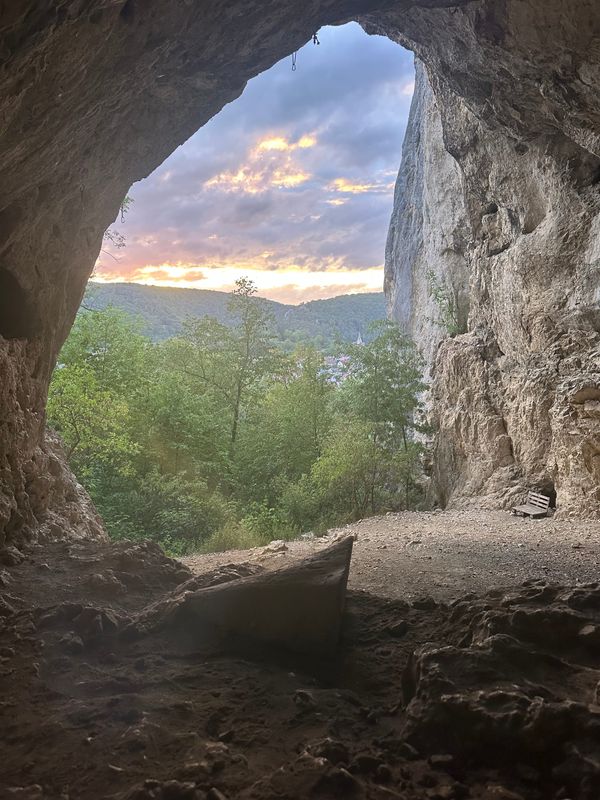
LuLu: Yeah, you would really risk a lot to find magic. I think I felt that sitting in a cave. Life is kind of dull in the cave. It’s safe and comfortable, but it’s very dull. You have to go out and find the thing.
Max: It’s quite predictable, huh?
LuLu: Yeah. It was still and comfortable and sweet and relaxing. And when you come out here, it’s different. Now adrenaline’s pumping, my awareness has gone up, and I am checking in with myself—ooh, am I even capable of this? Am I not capable? Do I like this? Do I not?
I’m thinking through all my memories of: What is this? What have I seen? It’s all coming through to evaluate my decision. When you’re out in the world, it’s a different thing than being in the cave.
I’m testing all my nerves and seeing which ones are working, and what muscles are on.
The Body’s Many Voices
Max: It’s weird. The thing that’s coming up right now has something to do with people who live in civilization and are subservient to the false laws of humanity through government—and how much they demand the government to change.
It’s like, “I am living in a state of lack of fulfilment and pain, so I expect the government to change so that I can live a better life,” rather than employing this thing of risk and going out and creating for themselves an environment and a life where they would be able to live fully.
It’s weird because no one else can ever give you permission to do that. You have to do it.
I just killed the bug.
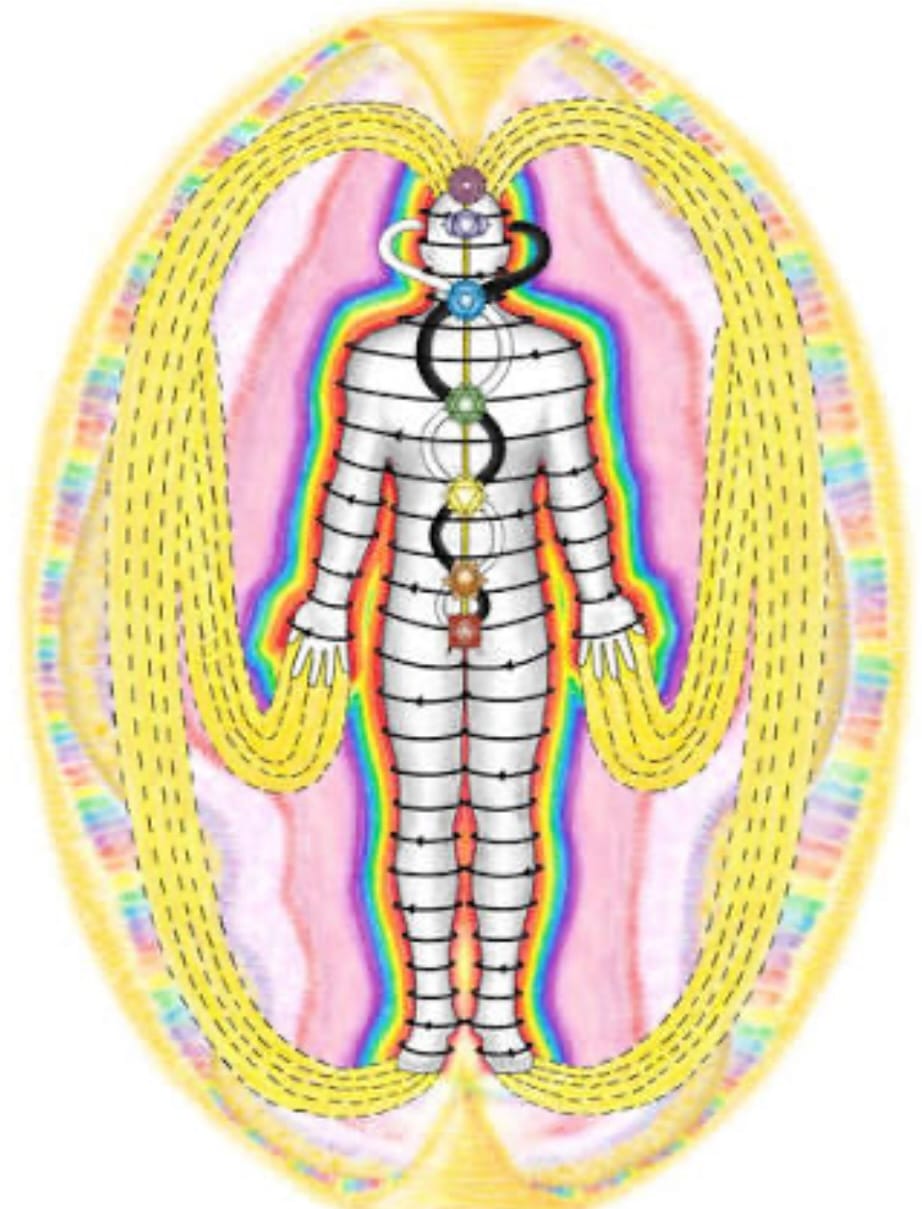
Yeah, it’s interesting. Right now, for me, from a glandular perspective, my masculine root is like, “Can I do it?” It’s looking for stable foundation.
My feminine root is like, “Should I even be doing this?”
My pancreas is like, “Oh, this is fun. What are the fun things?” It’s really unworried about achieving or not achieving.
My gallbladder is actually a disaster, because if I fire that too much, it’s going to do it anyway. I’m trying to tame it down.
My thymus is kind of happy because I feel the connection of all the beings here, and with you. And my throat is wanting to say, “Let’s get the fuck off this mountain.”
My feminine six is telling me, “We don’t need to be up here to be dreamy. Dreamy’s available in a safe place too.”
Masculine six is evaluating all the routes and paths: can you jump it? It’s looking at the jump distance, the rocks, what the rocks are made of, looking in Lydia’s eyes and seeing if she’s going to try to jump this fucking gap right now, the types of grass that are here.
Again, we’ve talked a lot about the mind, so it’s unfortunately overly discussed. But it’s so fascinating.
The fact that there’s a part of me that evaluates the grasses and stones and angles naturally—that there’s a built-in thing that evaluates—is fucking cool. Super cool.
And seventh, for me, is like—I don’t know—it’s telling me to get off this mountain. Go down in the world and share things. But when I look at Lydia and connect to her energy, it goes, “Hey, your purpose is here now.”
Also, if you’re recording or making content or moving the thing forward, that also counts as seventh. So I’m here. I’m sitting here. Normally I would say, “Get the fuck out of here,” but—
Who Am I on the Other Side?
LuLu: Yeah, I’m also considering jumping, or climbing across this very sketchy gap and onto the other side of the ledge.
And I’m asking myself—not really any one particular part of my body, but just everything together—why am I drawn to that? Why would I want to do that?
One is to see if I can. But another is: is the sensation of life on that side different than on this side?
I think that’s the experience a lot of people have when they’re in some situation that feels stagnant and fucked in life, and they’re dreaming of something else. It’s like, “Who am I on that side of life?”
I’m looking at this ledge like, “Oh, who am I on that other side? Does life feel exponentially different?”
From pancreas, there’s just curiosity about that. And from gallbladder, it’s like, “I want to know if I can. I want to know how much fear I’m able to overcome in myself if I do that, or if any fear comes at all.”
From my root, it’s like, “I want to encounter my own limitations, actually.”
That’s a weird thing about root: it wants to encounter its own limitations. And if it doesn’t meet its limitations, you start to lose root.
I hadn’t realized that up until this point. And I think that’s something happening in the comfort of civilization, where people don’t really encounter their physical limitations very often. Because they never go there, they just start to atrophy. They never experience the physical limitations of their own body.
Coming Down
Max: Can we get off this mountain now? Can we come down now?
LuLu: But what if I want to climb this ledge?
Max: I don’t like it at all!
LuLu: All right. Let’s come down.