Eat the Right Angles ✔️
The Body Knows the Shape
Intuition, Food Geometry & Eating for the Mission
Episode SummaryNutrition preaches diversity: eat the rainbow, add another ingredient, cover every base. But what if diversity without intelligence is just noise? Maxfield and LuLu explore food as geometry, information, and tools—arguing that the body, when connected to a clear mission, can recognize not merely whether it needs carbohydrates or protein, but the particular form those resources need to take. Rice is not manioc. A grain is not a tuber. Different shapes build different things.
Chapter 1 — Diversity Without Intelligence
Maxfield:Yeah, you either need to speak directly into the— I mean, if we’re talking like this, it’ll be fine.
Like, nutrition, they say, is about diversity. But the diversity they’re speaking of is random electrical diversity. Thoughts and ideas that sound right.
“Eat the rainbow.”
You eat the rainbow because you’ve lost your intuition. You’ve lost connection with your body.
You don’t want to eat the rainbow. You’re gonna feel like shit. It’s gonna shut your seven thoughts.
You want to eat what you need in the moment.
I had peanut butter earlier. My body said, No, not that.
I said, “I want rice.” No. It said, No, not that.
I said, “Okay, you want water?”No, not that.
I said, “How about a banana?”Hmm.
Well, we ended up mixing those with kurakkan into a mix, and Bay was like, Oh, I love this.
Does that— you know what I mean?
Chapter 2 — The Tuber Version of the Shape
Maxfield:People will just be like, “Oh, I’m hungry, I need carbs,” so they’ll eat a bunch of rice.
Or they’ll— this is what you’re saying— like, “I can’t eat grains,” maybe, or whatever.
And your body’s going:
That’s not the thing I want.
I want it as manioc or sweet potato. I want the tuber version of that shape.
It’s a different shape than a rice grain, for example, or a wheat grain.
And this is where these shapes come in. It’s literal geometries.
It’s like Tetris.
Tetris is the shape game. You need different shapes to build off.
Chapter 3 — Food as Code
LuLu:And I think the reason why we need different shapes in different moments—shapes meaning different codes, or different qualities that are inside of food and whatnot—is because we’re doing different things.
And this is where the intuition comes from.
When you have connection with your body, and your body is connected to the thing that your mind is oriented to—so your body is connected to your mission and connected to your goals—then your body knows what it needs in order to execute that mission.
Specifically, what it needs in order to execute all of the small projects every single day in order to execute the big mission.
Maxfield:Right.
LuLu:Essentially.
If you’re on a day where your mission requires you to go out into the world and, like, on a hill, haul a bunch of fucking clay bricks and dig fucking holes and plant trees, it’s gonna require a different ratio of different nutrients than a day that you’re resting, or a day that you’re journaling.
Even though both of those things are part of the mission.
Chapter 4 — The Problem With “Eat the Rainbow”
Maxfield:But it’s like, also, if you just intellectualize these things—
We were just reading a very famous guy who’s in this industry. Maybe he’s the number one in this industry.
But he says:
“Eat the rainbow. Eat one new ingredient with every meal.”
Like, it just paralyzes me almost, the thought of that.
If you eat one different ingredient—like an intuitive ingredient—sure.
Like, mono diet? Not good.
It’s like planting crops. You don’t want monocropping, really, either.
But you also don’t want too many things. They’re gonna counterbalance and fight each other. It’s gonna be a war of insects.
You want it to be natural.You want it to be local.You want it to be native.
And it’s gonna come naturally.
You plant a few things you want, and you let the rest go.
That’s what you should do with your body.
Chapter 5 — The Soil Already Knows
Maxfield:The earth and the soil know.
That’s why it comes out this way.
You can’t just plant a bunch of random stuff.
Like squash, beans, and corn work together—not just because, oh, they crawl each other, they give each other shade, and they like each other.
They’re friends. They work well.
And the natives knew that. Or they were growing something different.
So there’s a mixing technology that comes in here.
Chapter 6 — Every Ingredient Is a Tool
LuLu:But it again goes to this idea that everything is a tool that either supports an activity or makes an activity harder.
And the same is true for ingredients and food.
So it’s like:
What are you doing right now?And what are you building?
And again, when the body and mind are connected, your body will crave the things it needs in the right ratio—in the form of different ingredients or different prepared foods—in order for it to get the right ratio of the tools it needs to execute this project for the mission.
I think that only happens:
A: when you have a super clear mission.
And B: when your body actually is connected with your mind.
Otherwise, you’re gonna be craving fucking random shit that has nothing to do with nothing.
Chapter 7 — Shooting in the Dark
Maxfield:Which is what’s going on with the health industry right now.
It’s kind of like shooting in the dark.
I feel like this thing of eating the rainbow—telling people to eat random things just because it’s diverse—is like, just shoot in the dark and eventually you’ll hit something.
And it’s like, yeah, you will.
But what if that thing has nothing to do with what your mission is in life?
The goal is not really just to hit a target.
The goal is to hit your target.
Lydia’s pretty mission-centric right now. That’s like what her code is encoding, as we’ve been talking before this recording.
For me, I’m a little bit on, like, how that mission takes place. What does that look like? And…
The Missing Piece
Hunger, Sacrifice & the Intelligence of Ingredients
Episode SummaryHunger becomes something more precise than a demand for calories: a signal from the thing being created. LuLu feels an exact missing piece—fish—while Maxfield develops the Tetris metaphor into a theory of food, sacrifice, and mission. Ingredients are not merely collections of nutrients; in this conversation, they become distinct entities carrying particular codes, qualities, and possibilities that may not be interchangeable.
Chapter 8 — Feeling the Gap
LuLu:I feel like the experience I’m having right now with food is a really good example.
It’s like, I just ate these finger millet pancakes that have finger millet and banana and egg. And it’s satisfied this quota that is required for certain geometries, certain nutrients.
And I’m still feeling in my body the gap—like Max is talking about this game of Tetris.
It’s like I’m feeling the sensation of this hole, this gap, this puzzle piece that has not yet been filled in my body.
And I’m requiring it specifically in the form of, like, fish.
That’s what my body is asking for.
It’s very targeted, very focused, very clear.
Chapter 9 — Hunger Is the Desire of Creation
Maxfield:Because hunger is a desire for a third entity.
It’s the desire of creation.
And it knows what it needs to create.
So creation is a third entity that you’re creating. Then you need a certain thing for that.
If you want to make pancakes, there’s a third entity. You can’t just go, “Oh, well, I’m gonna throw in whatever I feel like, or different colors. I’m gonna throw a blue in there and a red in there and a green in there, and then it’s gonna make a pancake.”
You need some type of, like, a floury thing. You need a binding agent. You need blah, blah, blah.
And then that makes a pancake, technically.
You could just do bananas and oats, for example. That would count, you know?
But you can’t do green beans and spinach. Like, that’s not gonna make a pancake.
And so it’s this interesting thing of this third entity is calling.
Chapter 10 — The Ingredient the Mission Requires
Maxfield:So what we’re doing is creating something.
So our third entity is saying, Hey, you need this thing.
Like Lydia needs this fish.
For me, I need this kurakkan pancake. It’s great for me, for example.
But eggs—my body didn’t want rice. It didn’t want eggs. But it’ll take this pancake.
And Lydia knows. She’s like:
“I don’t want eggs. I don’t want peanut butter. I don’t want a protein shake.”
Like, I need something that’s contained in an animal that science has not found, has not discovered, maybe will not ever, which is a core essential to the mission that we’re doing.
It needs a life. It needs an ingredient of a living thing, of an animal, in order to make it.
Which is almost like a sacrifice.
Chapter 11 — The Sacrifice Was Supposed to Be Eaten
Maxfield:Maybe this is where sacrifices came from in religion.
They were externalized, where they were originally supposed to be internal processes of like:
“Oh, we need to sacrifice a goat.”
No—the whole village should be eating a goat.
If you want this thing to happen, if you’re gonna appease the gods, maybe everyone—we need three goats, and everyone needs to cut them up and eat them.
That might have made these religious things work.
Maybe they did eat them, and that’s why.
“We must kill three goats now if this mission will succeed.”
And then they would kill three goats, cut them up, and eat them.
Maybe that’s how it used to go.
Chapter 12 — What Is Your Mission?
Maxfield:It’s like this context where people say, “Well, you can’t eat meat.”
It’s like, well, what’s your mission?
“Well, I don’t have a mission.”
Well, then don’t eat meat.
Like, that doesn’t make sense.
If you have a mission—which we do—which is, we must know the animal very intimately, we must know it very intimately, then we need to be consuming animals probably in order to know them very intimately.
If you want to know them from the inside, eat them.
Very clear.
Now, I won’t know the human from the inside. I don’t think I’m gonna eat a human.
But I’m sure that in the past, that’s probably how you learned human best, is you’d eat one.
You know, I’m sure.
Like nowadays we frown on it, but I’m sure.
Lydia gives Maxfield a very frowny face.
Chapter 13 — Similar Is Not the Same
Maxfield:But it’s fascinating, because there are different overlaps.
For instance, peanut butter and almond butter are similar things, for example, and you can exchange one for the other—peanuts and almonds.
Like fish and duck, maybe, let’s say, are similar things.
But some things are very different.
And I think that’s the diversity piece.
That’s where diversity should come in: making sure your nutrients are met, and not just eating randomly.
Chapter 14 — The Ingredient as a Being
LuLu:Kind of in a more mythological and abstract way, it’s sort of like understanding what that ingredient is as a being, as an entity—like what gifts and wisdoms it has to impart to you.
And your body can feel what that is.
And it will crave that thing in the form of that entity, whether that entity be like a banana or an almond.
It’s still this very distinct code.
And yeah, there are some that are similar.
But these things are not necessarily interchangeable.
The Manual for Now
Mission, Body Technology & Knowing What Things Are For
Episode SummaryMaxfield and LuLu push the food conversation into something larger: perhaps appetite changes according to what the body is being asked to build. From there emerges the central project—a modern instruction manual for the human body and the ingredients of life. Not a manual inherited from another century, but one written now, through direct experience with the technologies, foods, environments, relationships, and problems of now.
Chapter 15 — When There Was No Mission
Maxfield:So, for example, I’m very famously known, for those who knew me in the past, that I used to just fuck off a lot, and I would eat nothing. Very famous for this.
And I told people—they’re like, “Why do you eat so much?”
I said, “Well, because I have a mission.”
I used to say this. I have a goal. I have this job. I’m here to help.
If I wouldn’t, I’d be fucked off. I’d be sitting on the beach, you know, just drinking in the sunlight, doing nothing.
Or crawling—like, I’d starve myself.
And I think looking back on it, basically, I just didn’t have a mission.
Whenever I would abandon the mission, essentially, or take a break from it, then I wouldn’t need to eat.
Easy.
And makes sense.
Chapter 16 — A 24-Hour Mission
Maxfield:But now it’s like, okay, now I’m on a mission.
Now I have a mission that’s like a 24-hour mission.
It doesn’t depend on when a client walks in the door and when I’m working.
I have this other thing, this third entity, which is 24 hours, which is different, which requires a different thing.
I don’t necessarily need 10 eggs a day or beef every other day. Not necessarily.
But it has a different set of requirements, and we’re trying to figure out between the two of us:
What are those requirements?
One of those requirements is another body—is another human.
And it’s both a male and female, apparently, to complete it, it seems. And in a specific proportion, specific geometry.
Maybe the male needs to be eating this. The female needs to have these codes in it.
There are very specific codes to make the thing that we’re making.
And we’re still discovering what this new diet is, and this new environment, and new location.
We’re still figuring out what we need to build it.
Super fascinating.
Chapter 17 — Good for What?
LuLu:You can’t just say oatmeal’s good for you and blueberries contain antioxidants, so I’m gonna eat those.
Maxfield:Right. It’s like saying a screwdriver is good, and a blender is good.
It’s like:
Good for what?
All of these things are hypothetically good, but what are you trying to plug them into?
I’m not gonna use a blender to play a movie, you know?
And I feel like that’s what a lot of people are doing.
People are like, “Oh, people should eat blenders because they’re really high-powered, and they’re really fast, and it’s a new thing, and it’s really, really great.”
Sadhguru talks about this exactly. He talks about how people are just pushing random buttons and hoping life works out.
People are going insane because they’re trying to use a blender as a movie projector, and they’re trying to use a screwdriver as a sewing needle.
And they’re like, “Fuck, life’s so hard.”
It’s not.
You’re just using the wrong thing.
Chapter 18 — The Instruction Manuals Died
Maxfield:And the issue—and solution—is someone wrote an instruction manual, which is great.
Here are two problems with the world.
One: the instruction manuals pretty much died off about 50 years ago.
And the ones that wrote them died off like 100 years ago—the last of them.
Which, I mean, end point, that’s sufficient. Like, that’s it.
So you need a new one.
You need someone who’s born now, who can write one now, who’s relevant to the moment, using the technologies of now, using the tools of now, the buttons of now, to write a manual for now.
To explain to people how to use things.
First and foremost, their body.
Chapter 19 — Body Technology
Maxfield:Because they’ve lost body technology, and they’re using their body for crazy things.
They’re using bodies for breeding cattle and information storage systems and fucking art—what’s it called, a background? What do you paint on?
You paint on—
LuLu:A canvas.
Maxfield:As an art canvas.
And they’re using it as a hammer, you know?
They’re using it for all these various things—which you can use it for. It’s doable.
But it’s a super-intelligent device designed to connect and web with nature, and to hear the cosmos singing and the sounds of the stars, and to reorganize the world itself.
Like, that’s what it’s built to do.
It’s built to tend nature, probably.
And people just—there’s no manual.
They died off again.
We need a modern manual.
Chapter 20 — A Manual Made With the Technologies of Now
Maxfield:So we’re using AI and cell phones and water filters and grocery stores and airplanes to make a manual on how to live now, in the now, for the now.
Because if we didn’t use airplanes or water filters, we couldn’t tell you about how to use them.
We wouldn’t know.
We’ve got to have experienced that thing.
Lydia and I have such diverse experiences in our lives—different sides of the world, very different backgrounds, very different growing up—to mix and make this really diverse instruction manual.
And it’s an instruction manual on how to use a body.
We talk about other things.
This is a body instruction manual.
Maybe later we’ll do other ones, you know—how to use a knife, how to use a computer, and things.
But generally, it’s a body thing.
We will talk about how to use airports. You’ll hear that in here. How to use cars, like, you know, whatever.
But—
Chapter 21 — Every Ingredient in Life
LuLu:I feel like it’s about how to use every ingredient in life.
It’s like the manual is what every ingredient in life is.
Like what every type of fruit is, you know, what every type of grain is, and what it wants to be used for.
What kind of tool it is for the body, essentially.
And when you know what everything in life is—as a tool, as a code, as an entity, as an ingredient—what it inspires, then you can reach for the right thing if you know what kind of divine work is trying to come through your body.
You can, like, armor it with the right thing.
You can load it up with the right tool for that thing.
Chapter 22 — The Wrong Ingredient in the Wrong Machine
Maxfield:If you put a chocolate bar in your gas tank, you’re gonna have a really bad day, for example.
Where if you put premium gasoline in it, for an automotive car, you might have a really good day.
For those of you that don’t know, a chocolate bar is the easiest way to completely destroy an engine.
One chocolate bar in someone’s gas tank, and the whole car’s done for good.
Totaled.
See you now.
The Body Says Yes
Separating Mental Appetite From the Body’s Signal
Chapter 23 — Leave the Food Out
Maxfield:A little trick to this is I leave food out, because then when my body sees it, it says yes.
Like, if I have to think of it with my mind, I generally don’t know what my body needs.
But when I see it, my body—I go like, you know—I crave it.
That’s a little trick that I use to know what to eat.
Like, oftentimes if I go, “I’m hungry,” I go, Ooh, I want ice cream.
But then I look at ice cream, and my body’s like, Yuck.
My mind might want it. My body doesn’t.
So I generally leave my food out for this reason.
Chapter 24 — Craving What Is Relevant
LuLu:And again, I think part of the body craving the right things is that it will crave the things that are relevant to the things you are doing, if that thing is in line with, like, the truth of who you are as a being, as a soul.
And so one way you can do that—to, if you will, remind both your mind and body of what its blueprint is and what you’re doing as a soul here in this world—is to talk about it.
Talk about it.Think about it.Feel into it.Feel the emotions of it.Practice it.
When you’re doing it and thinking about it, your body’s on board.
And so your body’s gonna crave the right things.
Chapter 25 — Flipping Through the Foods
LuLu:Flipping through different foods—like, I’ll flip, I won’t necessarily leave food out, but I’ll flip through different foods in my mind.
And my body will very clearly send, like, a desire signal toward that thing.
It’ll say yes.
Papaya Time
Memory Cravings, Body Cravings & the Ethics of Eating
Chapter 26 — Chicken Fajitas From Childhood
Maxfield:You know, for example, I’m hungry now, and I’m looking around to try to find out what I need.
And Lydia’s naming things, going, “Hey, what about this? What about this?”
Sometimes that works for me. Sometimes it doesn’t. That doesn’t work for me right now.
Because if I do that, my body says, I want chicken tacos.
And it imagines the chicken tacos I had at lunch when I was like 10 to 15, and they were of the lowest quality you could get. Just absolutely horrible.
They called them chicken fajitas.
If you choose electrically, that’s what people do, and then they keep eating that.
They eat the foods of their childhood.
“Oh, I’m hungry. Ooh, I’m gonna eat a peanut butter and jelly just like Mom made.”
Whereas if you ask your body, it’s not gonna want to eat that.
Chapter 27 — The Papaya Signal
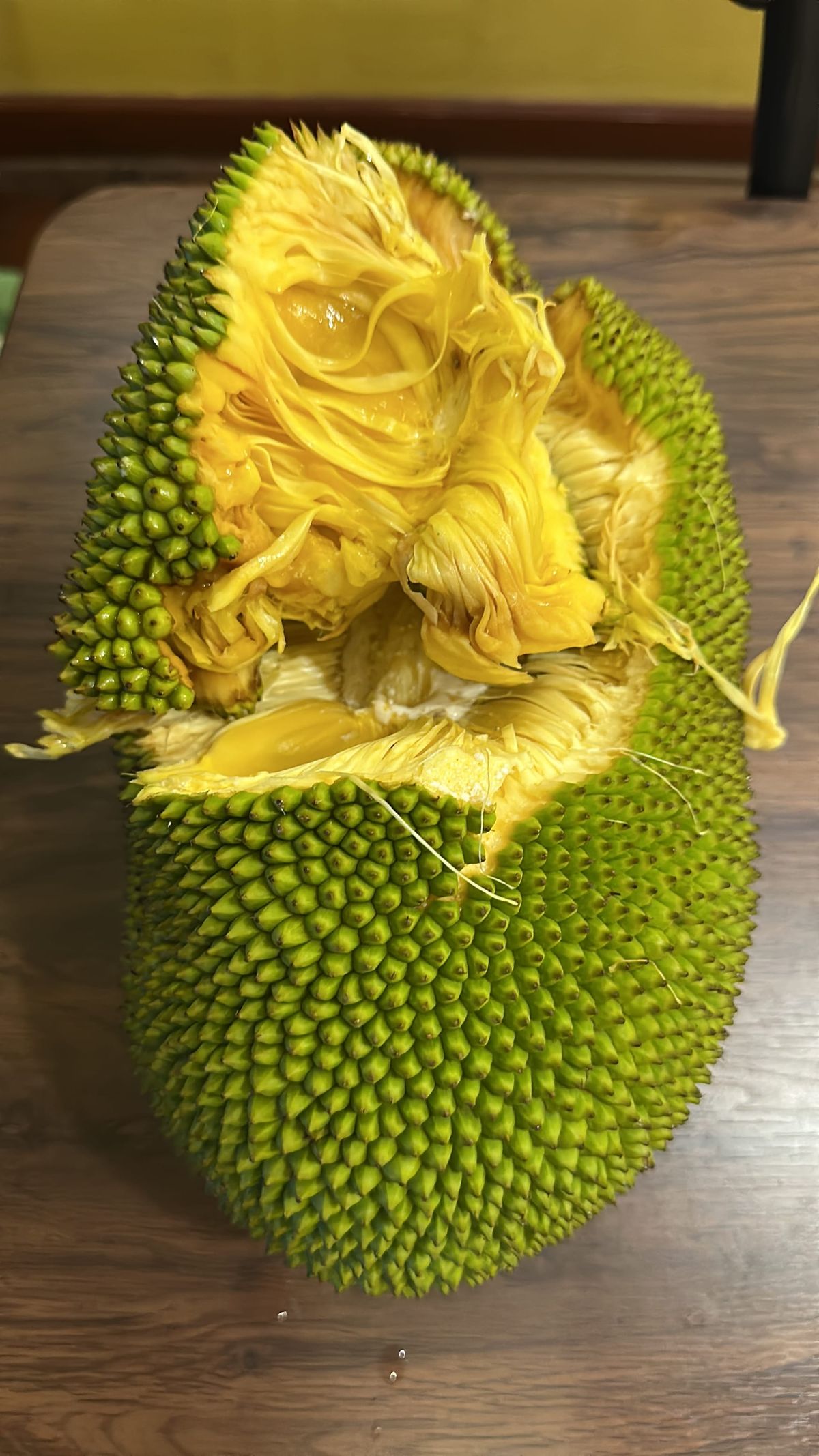
Maxfield:If you actually listen to it, it probably wants to eat this papaya sitting next to me.
I look at the peanut butter. It’s like:
No, not that.
If I look at the Minos, it goes:
Okay, I kinda like that, but it’s not what I need.
And I think the answer’s ultimately gonna be papaya.
The papaya’s what my body wants.
Immediately, it starts salivating in my mouth.
Fortunately, I have one in front of me, which is quite useful.
Would you grab a knife?
It’s papaya time.
Chapter 28 — What You Eat Multiplies
Maxfield:This weird thing that used to happen, where whatever you ate sort of multiplied.
You ate papaya, more papaya would show up in the world.
That’s just the way it worked.
You eat a papaya, you poop, and then a papaya tree comes out. Or berry.
Animal foods are a little different.
You eat an animal, you take it out of the food chain.
I think that’s why animals are sacrifices. It’s different.
And if you don’t have a mission, you’re not allowed to eat animals.
Like, if you don’t have a mission that requires them, you’re not allowed to eat them.
Chapter 29 — Mission Determines the Requirement
Maxfield:And I think that’s a clear distinction that’s messed up in the yoga community, because they have gurus, they’ve abandoned their seventh chakra, therefore they have no mission, and therefore there’s no way of—the requirement, you know.
But you can’t just eat meat because that’s the family tradition.
And we see this a lot in family members, where the kid eats the same thing as the dad and the kid’s all messed up.
And family businesses and things.
It doesn’t work the same.
Papaya Time
Memory Cravings, Body Cravings & the Ethics of Eating
Chapter 26 — Chicken Fajitas From Childhood
Maxfield:You know, for example, I’m hungry now, and I’m looking around to try to find out what I need.
And Lydia’s naming things, going, “Hey, what about this? What about this?”
Sometimes that works for me. Sometimes it doesn’t. That doesn’t work for me right now.
Because if I do that, my body says, I want chicken tacos.
And it imagines the chicken tacos I had at lunch when I was like 10 to 15, and they were of the lowest quality you could get. Just absolutely horrible.
They called them chicken fajitas.
If you choose electrically, that’s what people do, and then they keep eating that.
They eat the foods of their childhood.
“Oh, I’m hungry. Ooh, I’m gonna eat a peanut butter and jelly just like Mom made.”
Whereas if you ask your body, it’s not gonna want to eat that.
Chapter 27 — The Papaya Signal
Maxfield:If you actually listen to it, it probably wants to eat this papaya sitting next to me.
I look at the peanut butter. It’s like:
No, not that.
If I look at the Minos, it goes:
Okay, I kinda like that, but it’s not what I need.
And I think the answer’s ultimately gonna be papaya.
The papaya’s what my body wants.
Immediately, it starts salivating in my mouth.
Fortunately, I have one in front of me, which is quite useful.
Would you grab a knife?
It’s papaya time.
Chapter 28 — What You Eat Multiplies
Maxfield:This weird thing that used to happen, where whatever you ate sort of multiplied.
You ate papaya, more papaya would show up in the world.
That’s just the way it worked.
You eat a papaya, you poop, and then a papaya tree comes out. Or berry.
Animal foods are a little different.
You eat an animal, you take it out of the food chain.
I think that’s why animals are sacrifices. It’s different.
And if you don’t have a mission, you’re not allowed to eat animals.
Like, if you don’t have a mission that requires them, you’re not allowed to eat them.
Chapter 29 — Mission Determines the Requirement
Maxfield:And I think that’s a clear distinction that’s messed up in the yoga community, because they have gurus, they’ve abandoned their seventh chakra, therefore they have no mission, and therefore there’s no way of—the requirement, you know.
But you can’t just eat meat because that’s the family tradition.
And we see this a lot in family members, where the kid eats the same thing as the dad and the kid’s all messed up.
And family businesses and things.
It doesn’t work the same.